Thursday, 23 June 2011

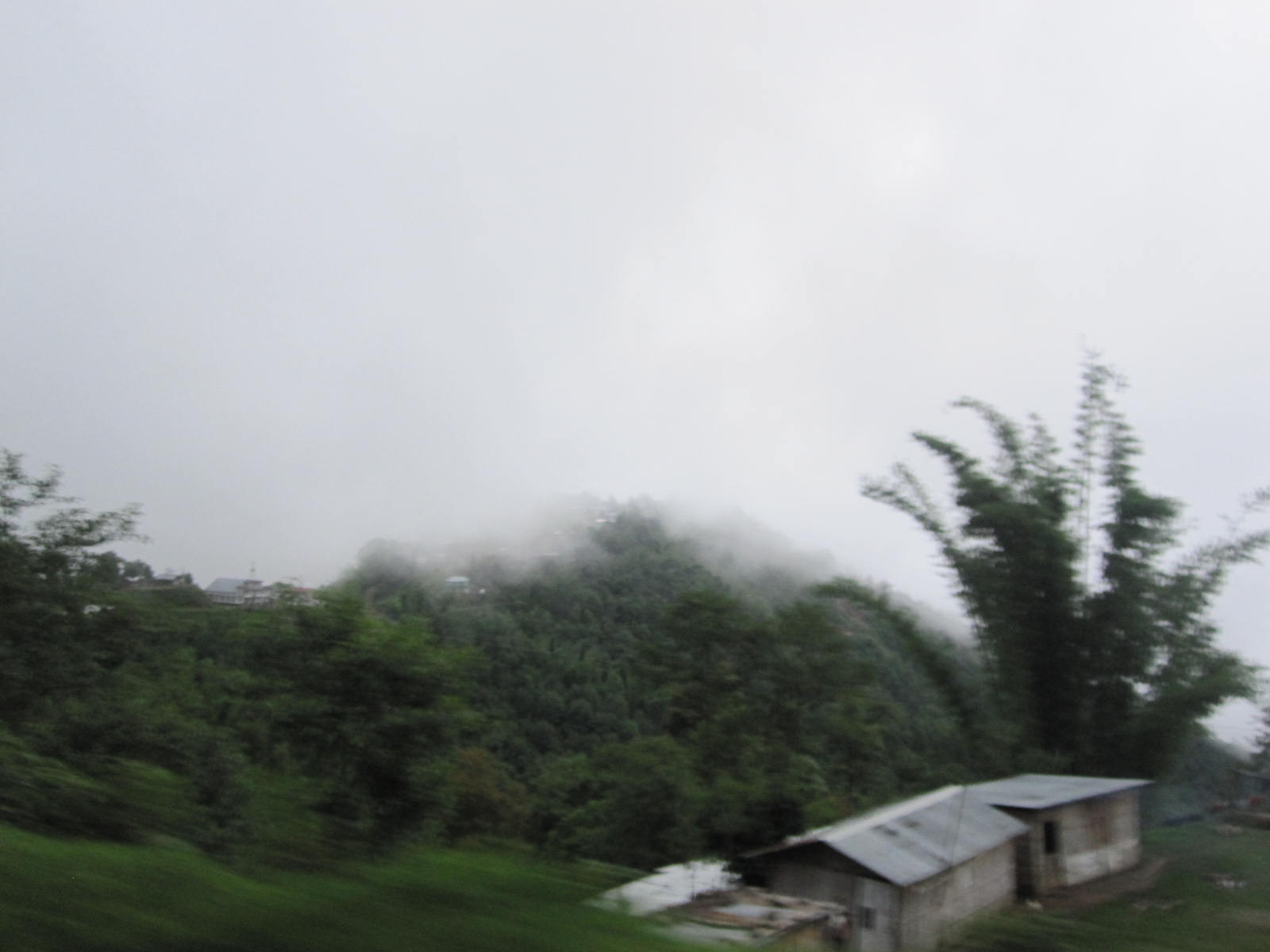
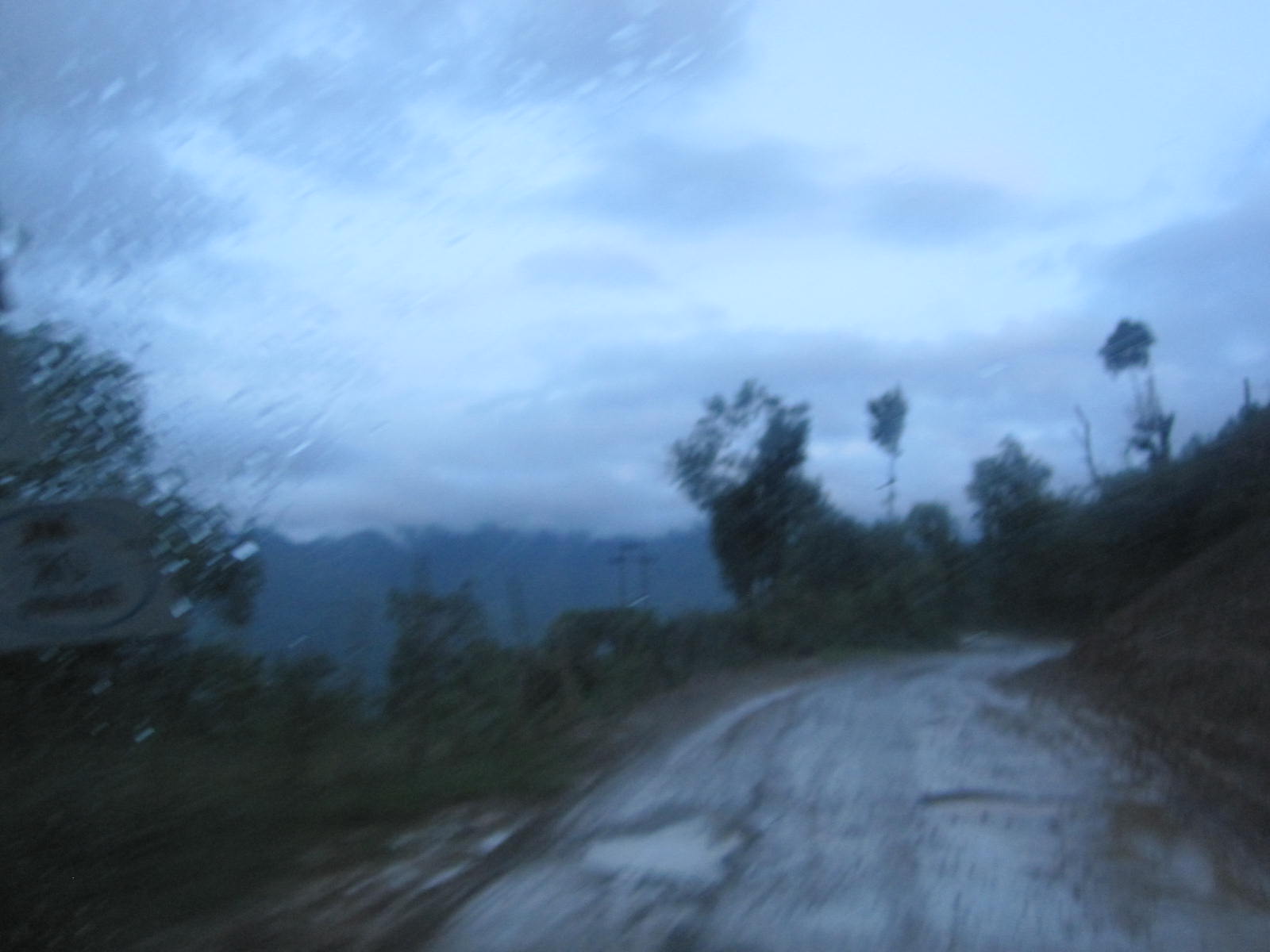
More clouds and no roads: Monsoon Nagaland

Beautiful land, beautiful people, beautiful festivals and terribly scarred and ugly roads don't go too well together. Only if our roads were living beings they'd sort themselves out in no time. Unfortunately they need human intervention in not only using them but also maintaining them regularly. Give to Ceasar what belongs to Ceasar...but it's time now to give to roads the public funds that belong to roads - the God of all transportation and communication in this remote rural patch of Earth.


Here's something to cheer for after all the grotesqueness of what used to be nice, smooth, death-risk-free roads a long time ago. A sight that money can't buy nor be marred by human selfishness (for now at least).

Sunday, 19 June 2011

Summer in Nagaland: Roads and clouds


If you enjoy summer rain and clouds and if you are also a bit of a wild adventurer and a lover of "rough and dangerous" terrain, this is probably the best season to tour the hills and villages of Nagaland to soak your Hunting Boots (but totally against hunting) or rubber chappals in mud and experience extremely heavy downpours clobbering corrugated iron roofs with raindrops as big as juicy local plums. You can take a bus, Sumo or hire a private taxi. Shared Sumo taxi works good for me: less fuel consumption per head, good for environment/Mother Earth, co-passengers to help in case of a vehicle/mental break-down, enlightening conversations, occasional drunks with endless stories and hot mid-way local meals.


Thick fog covers the roads, hills and houses every other day this season like a white blanket with moving wispy tentacles. It is dangerous and a great strain for the eye to drive through cloud-shrouded roads  especially when the potholes-sculpted roads resemble volcanic craters and small and large landslides surprisingly greet you with big boulders, uprooted trees and eroded soil that guide you all the way to wherever your destination is within the State.


Despite the suicidal conditions of the road in many areas, i believe that humans still love an element of risk and dare in life, besides, it’s not like we’ve got great many options of commuting in this region. I won’t take a helicopter ride at this time of the year and get lost among the clouds forever. Geographically we are far away from the Bermuda Triangle. 


If anyone wishes to travel here this season and if you’d love to see hilly areas with thick jungles inhabited by ferocious-looking tribesmen and tribeswomen - there are no leaves skirts, skull-necklaces and head-hunting these days unfortunately but it will still be worth all the pain and inconvenience because there are over a hundred shades of green in all their leafy shapes and sizes, scenes of blue-green hills drowned in oceans of cottony clouds, spectacular sunsets and the peak season for lots of lots of rain, mud (chemical-pollution-less, we can mud-wrestle), bugs and bug-songs, cicada-songs 24/7, plums, water-plums, peaches, pears, chillies, beans, cucumbers, wild edible leaves with medicinal properties, all organic. Traditionally, we love to over-feed our guests despite their polite protests and most locals usually like to entertain visitors and strangers in town - invite them to lunch and dinner for free over and over unlike a few other places. :-p
Btw, don’t worry about the state of the roads, you won’t die. How have locals here survived for centuries otherwise?


Saturday, 18 June 2011

Gorgeous Moths of Nagaland - but how to identify them?

Took these pictures at Zunheboto. As summer begins here, hundreds of moths and bugs of all shapes and sizes come alive, flying, crawling or just meditating on the walls and roofs and around light bulbs and sometimes they annoy a lot of people :-) but they're such a pretty sight, aren't they? I think they're interesting creatures. I can hardly differentiate between a moth and a butterfly but I guess these ones are moths because they come visiting at night :-). Perhaps some lepidopterist could help identify a few here.


Thursday, 16 June 2011

The Sun should rise at 10PM in this corner of Nagaland: my 'on' and 'off' relationship with electricity


What exactly is the use of electricity after 10 PM in rural areas where there are no huge machineries or industries run by electricity. I can of course think of some uses – to charge your Chinese emergency lamps to light it as soon as the power goes off after a few hours, to burn a bulb in the chicken coop for the ballooning broiler chicks, charge mobile phones and perhaps a laptop or two.  Maybe it’s for the sake of hospitals. However, these reasons still do not satiate my electrifying desire to know what could be the other more useful uses of electricity for the public at midnight; maybe it’s for us to burn the ‘out-light’ at the verandah to scare off unwanted other-worldly pests... but there aren’t many were-tigers, goblins or evil spirits around these days preying on human flesh at the stroke of twelve. They’ve probably taken other human forms.

This continuous hide-and-seek game with electricity and my on-and -off relationship with all types of communication devices including mobile networks makes me wonder - why was this thing called electricity even discovered? Who was this madcap who thought such a thing would help mankind? Seriously, here in ZUNHEBOTO, no such thing exists. It’s a nuisance. When you need it, it’s never there and when you don’t, that is, in the dead of the night when the entire household is snoring dreaming of uninterrupted power supply, it just insistently lights up upswept cobwebbed corners of the house and someone has to sleep-walkingly switch off the offending brightness throwing in a few expletives. You just don’t know when the light is coming or going. It is supernatural -- amazingly out of this world. From darkness to more darkness, come storm, come rain, come wind. The only consoling fact is that after 10PM the citizens are assured that the power supply will continue till 6AM. I don’t know if it goes off in between because I’ve not yet done an all-nighter yet to monitor its visitations but once the town’s people are up and about after six in the morning, it goes off, for sure.

Only if the Sun rises at 10 PM then can it match the timings of our town’s power supply, and the Sun can set at 6 AM so that people can work at daylight with the added bonus of uninterrupted power supply, sleep when the Sun sets and not become nocturnal creatures waiting for electricity at sleep-time. The Solar System has to change its course to suit the moods of our town’s electricity supply, there aren’t better options. If there were, it couldn’t have taken 60 years.

Rural India connecting India? Absolutely not.  No uninterrupted electricity, water supply, bad roads, it took six months to fix an existing broadband connection that went faulty and when it was finally fixed  the entire network goes down, yet again.  How is that connecting India? The day’s newspapers reach at night or days late, come rainy season and the roads are blocked with landslides. What are the other modes of communication? Pigeon post? How can a rural area with conditions such as these really connect and participate with the larger crowd outside in the country and the world? It’s not only about my town but there must be many other areas facing these frustrations.
It would have been a different ball game all together if we were kept at that rumoured anthropological zoo with no contact with the outside world, only unseen prying eyes studying, dissecting our every move. At least there would be no “need” created for electricity, water supply, internet and emails and connections and much more. Unfortunately, the Zoo did not happen... or did it and it backfired? Whatever the case, I hope this current zoo with major “current” problems get resolved soon.

Wednesday, 8 December 2010

The real village view: Hekiye Village and goats


After Thokihyi, the next village I saw was Hekiye, less than an hour's walk from Zunheboto. I went by foot with a friend and a cute baby :) and it wasn't too bad... though it was a very brief visit, what struck me deeply was the stark difference between peoples' lives even within 5 km radius. I somehow feel that the divide is widening more and something ought to be done.

Nagaland is made up of hundreds of villages with nearly 90% of the population living in villages and therefore to experience the real Nagaland or any rural region, in my opinion, is to experience how majority of people live everyday. I don't think a one-off  special display of traditional finery and costumes, some stunts and dances once a year can be a true representation of one's culture and how people really live. Although it is wonderful to showcase our festivals and our rich cultural activities, I think it is as important to pay attention to people at the grass-root level, in remote and road-less, water-less, electricity-less, medicalcare-less villages who have no idea if they have the right to live life to the full potential and if they'd  always be under the mercy of the changing seasons and people who govern them from far away.

Photos of Hekiye Village


The real village view: Guavas and mud - a short trip to Thokihyi

I've been wanting to visit as many villages as possible in Zunheboto area and this year the first chance came a few weeks ago - a visit to a village on the other side of Tizu River. It's been many years since I have seen Tizu and the villages around so I sort of forced my dad to take me along on his trip to Thokihyi Village - a small, quaint village on a hill above the gold and yellow paddy fields of Tizu... and what an eye-opening guava-experience it turned out to be!

                                            The road to Thokhyi and how the vehicle almost turned ulta.

For me the trip was all about guavas - the rows and rows of guava trees laden with juicy, plump guavas - yellow and green and pink weighing down every branch and no one to eat them, not even pigs! :( Guavas ripening and rotting everywhere, on trees, in the small gardens around every house and on the roofs of make-shift toilets and pig sties, I even saw a bunch thrown outside the village church building so I helped myself greedily which amused the villagers quite a bit. (Sometimes it's not such a bad thing to let people laugh at your expense :)...the villagers brought me two big bostas stuffed with guavas!)

                                               Guavas thrown outside the village church building.

Although the star attraction was guava, there were a lot more that caught my interest...mushuthi (pomello), sugarcane, gourd, bamboo, 8 wild fowls (killed) and roads as muddy as can be. It's a pity that our land has so much resources, fruits and vegetables that grow abundantly without much human effort and everything that grows here from a blade of grass to huge alder trees are organic but most of the produce go to waste like these guavas!

Guava trees


The Chief's house with Mithun heads


                              Tizu river and paddy fields - on the way back from Thokihyi