Showing posts with label Nagaland. Show all posts

Sunday, 17 July 2011

Belling the cat or musing about the bell?


We all know the classic Aesop’s fable about a group of mice whose rotten, gutter-born life became rodently intolerable due to the constant threat posed by the ever-looming presence of a fierce, menacing, blood-sucking, fanged and poison-whiskered cat and that made a plucky young rat suggest the brilliant idea of belling their predator. This idea was so sound but the prospect of meeting and belling the mighty cat became eternally unsound.  
   
This pathetic situation reminds me so much of our situation living with these guttery roads, tormenting landslides, rotting garbage, irregular electricity, desert-like water scarcity in a heavy rain-fed area, lawlessness,  remorseless vandalising agents, resource-rich employment starved region, guns and factions, overground and underground issues and the pain to make sense of things, substitute employee-keeping, absentee government employees, paan-chewing board-game-playing customer care officials, the steep and dangerous deepening gorge dividing two distinct groups of people, general apathy and the hopeless acceptance of ‘that’s the way it is’.


No doubt, there is also so much going on about what size the bell should be, what brand, what type of sound it should make, how loud its decibels and whether it should deafen and petrify the cat and his mates as well. Everyone has an opinion about how things should be and this is not new, for decades and decades we’ve all had these brilliant ideas but it has become impossible to bell the monster. Someone should do this, somebody should speak out... why can’t they make this better? They should start doing this, they should clear these roads, they should oil that machine, they should, they should and they should!

I wonder who are the mythical ‘they’ and ‘somebody’ who are going to do this and that and that?




Friday, 15 July 2011

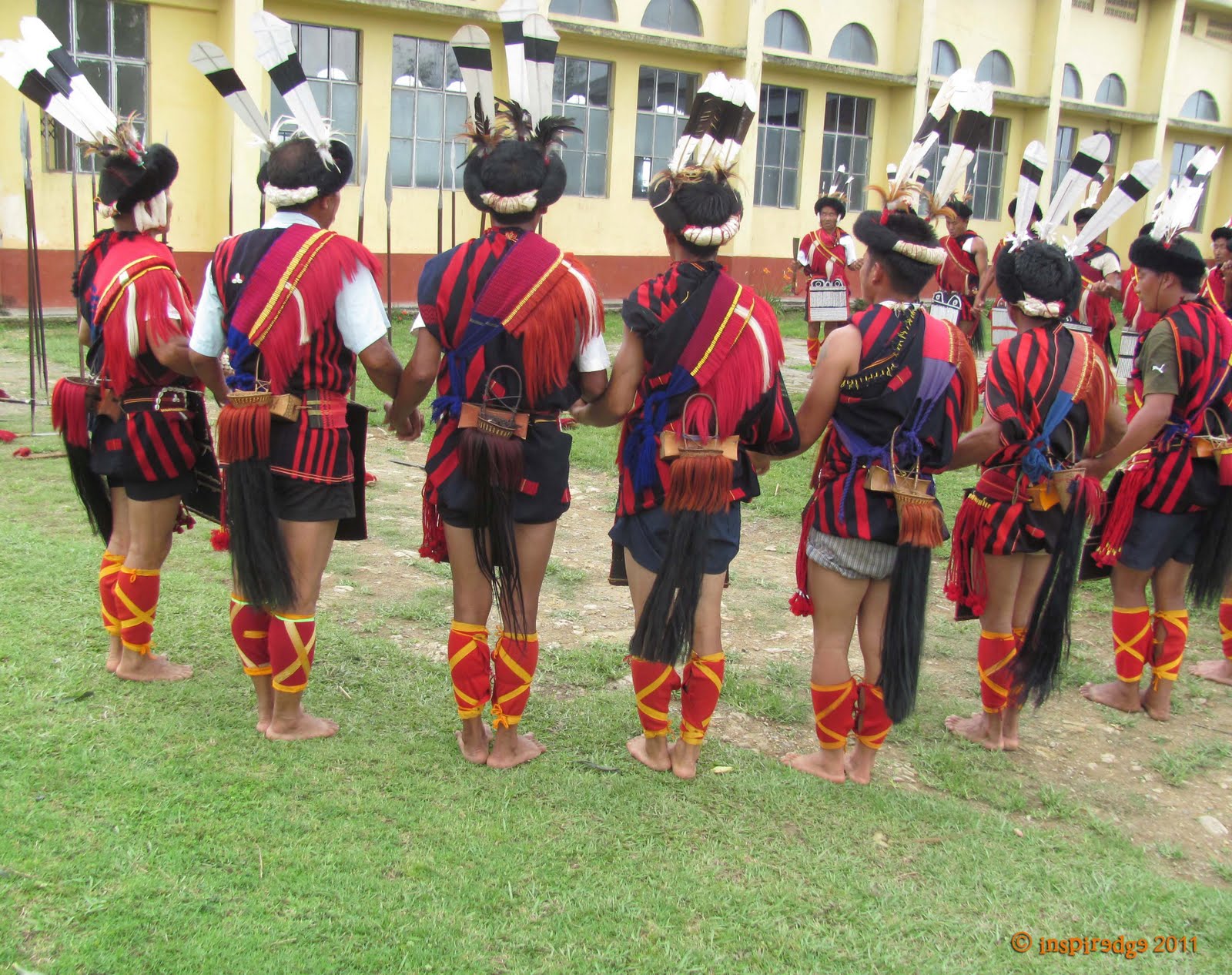
Sümi War Dance (Aphilakuwo)

The war dance is one of the most important cultural dances of the Sümi usually performed during feasts of merit and after a great head-hunting victory in the days of old. Only those who had taken heads or at least speared an enemy could wear these colourful dancing gear. Each piece of jewellery and cloth worn for this dance has a meaning and every piece has to be earned. It is genna to wear this attire without gaining the required achievements, it symbolizes victory at war like the laurel wreaths worn by victors in ancient Greece as symbols of victory.

The story behind the origin of this dance is interesting. The dance is not of earthly origin but was learned from the Sky People or sky spirits according to legend. This story can be traced back to Chisholimi village in southern Sümi area to a man named Rotoki whose only daughter Eli was taken up to the sky by Kungumi (Kungu=Sky, mi=people, probably ETs :-p) and she married a Kungumi. There are different versions of this story but all stories mention the Sky people, some tells about Kungumi descending from a red burning star to take a wife from Earth. I'll make another post for the full story meanwhile these are men of Khukiye-Lukhai village - one of the best dancers in the region doing the Aphilokuwo in their 'Kungumi-inspired' finery.


     The leader (Atou) leading the dance: dancers will follow his commands for foot-tapping, change in steps and when to stop. They sing the 'ho-e-ho-e-ho-o-ho-o' song as they dance.

Spears and Azhtaqo are kept in a circle as they began their dance

 One of the oldest dancers with his Akinisupha (cotton ear decoration)


                                               Young warriors holding their Spears and Azhta

Wednesday, 8 December 2010

The real village view: Hekiye Village and goats


After Thokihyi, the next village I saw was Hekiye, less than an hour's walk from Zunheboto. I went by foot with a friend and a cute baby :) and it wasn't too bad... though it was a very brief visit, what struck me deeply was the stark difference between peoples' lives even within 5 km radius. I somehow feel that the divide is widening more and something ought to be done.

Nagaland is made up of hundreds of villages with nearly 90% of the population living in villages and therefore to experience the real Nagaland or any rural region, in my opinion, is to experience how majority of people live everyday. I don't think a one-off  special display of traditional finery and costumes, some stunts and dances once a year can be a true representation of one's culture and how people really live. Although it is wonderful to showcase our festivals and our rich cultural activities, I think it is as important to pay attention to people at the grass-root level, in remote and road-less, water-less, electricity-less, medicalcare-less villages who have no idea if they have the right to live life to the full potential and if they'd  always be under the mercy of the changing seasons and people who govern them from far away.

Photos of Hekiye Village