Sunday, 17 July 2011

Belling the cat or musing about the bell?


We all know the classic Aesop’s fable about a group of mice whose rotten, gutter-born life became rodently intolerable due to the constant threat posed by the ever-looming presence of a fierce, menacing, blood-sucking, fanged and poison-whiskered cat and that made a plucky young rat suggest the brilliant idea of belling their predator. This idea was so sound but the prospect of meeting and belling the mighty cat became eternally unsound.  
   
This pathetic situation reminds me so much of our situation living with these guttery roads, tormenting landslides, rotting garbage, irregular electricity, desert-like water scarcity in a heavy rain-fed area, lawlessness,  remorseless vandalising agents, resource-rich employment starved region, guns and factions, overground and underground issues and the pain to make sense of things, substitute employee-keeping, absentee government employees, paan-chewing board-game-playing customer care officials, the steep and dangerous deepening gorge dividing two distinct groups of people, general apathy and the hopeless acceptance of ‘that’s the way it is’.


No doubt, there is also so much going on about what size the bell should be, what brand, what type of sound it should make, how loud its decibels and whether it should deafen and petrify the cat and his mates as well. Everyone has an opinion about how things should be and this is not new, for decades and decades we’ve all had these brilliant ideas but it has become impossible to bell the monster. Someone should do this, somebody should speak out... why can’t they make this better? They should start doing this, they should clear these roads, they should oil that machine, they should, they should and they should!

I wonder who are the mythical ‘they’ and ‘somebody’ who are going to do this and that and that?




Friday, 15 July 2011

Music of the day


Sümi War Dance (Aphilakuwo)

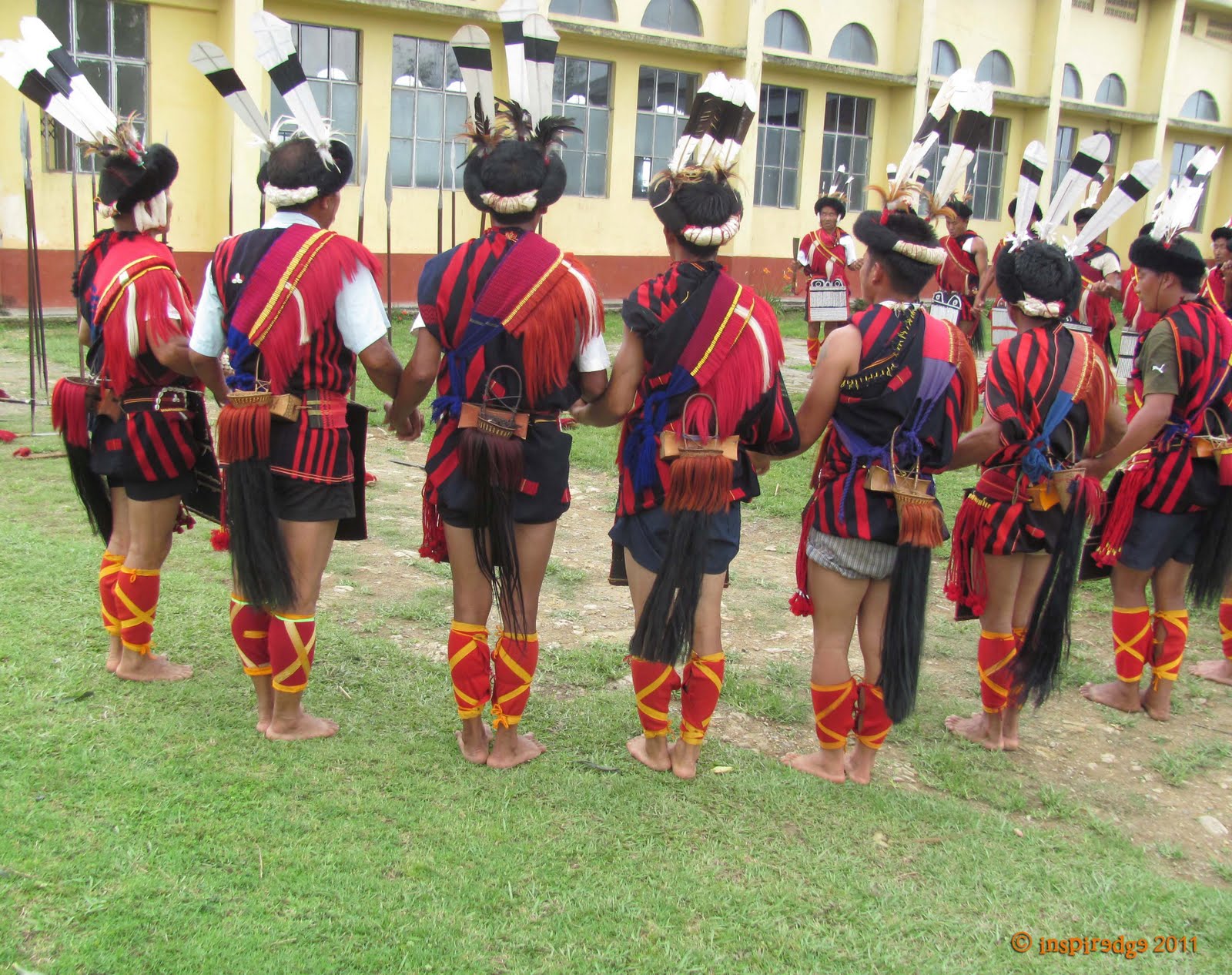
The war dance is one of the most important cultural dances of the Sümi usually performed during feasts of merit and after a great head-hunting victory in the days of old. Only those who had taken heads or at least speared an enemy could wear these colourful dancing gear. Each piece of jewellery and cloth worn for this dance has a meaning and every piece has to be earned. It is genna to wear this attire without gaining the required achievements, it symbolizes victory at war like the laurel wreaths worn by victors in ancient Greece as symbols of victory.

The story behind the origin of this dance is interesting. The dance is not of earthly origin but was learned from the Sky People or sky spirits according to legend. This story can be traced back to Chisholimi village in southern Sümi area to a man named Rotoki whose only daughter Eli was taken up to the sky by Kungumi (Kungu=Sky, mi=people, probably ETs :-p) and she married a Kungumi. There are different versions of this story but all stories mention the Sky people, some tells about Kungumi descending from a red burning star to take a wife from Earth. I'll make another post for the full story meanwhile these are men of Khukiye-Lukhai village - one of the best dancers in the region doing the Aphilokuwo in their 'Kungumi-inspired' finery.


     The leader (Atou) leading the dance: dancers will follow his commands for foot-tapping, change in steps and when to stop. They sing the 'ho-e-ho-e-ho-o-ho-o' song as they dance.

Spears and Azhtaqo are kept in a circle as they began their dance

 One of the oldest dancers with his Akinisupha (cotton ear decoration)


                                               Young warriors holding their Spears and Azhta

Wednesday, 13 July 2011

Music of the day


Britishmino Rotomi Hakiphe Le (A song about how the British burnt Rotomi Village in 1883)

( Source: Apu Asu Leshe, Sema Literature Board, 1988)
In the month of June 1883, the people of Rotomi village head-hunted one of the Tsungukimi. Some of the neighbouring tribes informed the British Government about this incident and consequently Lt. Boileau with 42 soldiers and officers of the 44th Sylhet Light Infantry came to Rotomi and set the village on fire killing 50 to 60 villagers, all livestock and granaries were brunt to ashes. Till today people can dig out remains of burnt paddy in and around their village. This was during the administration of Mr. R. B. McCabe, ICS , the then Deputy Commissioner of Kohima and under his command this order was carried out.

This song was composed by Inaghi Yepthomi sorrowfully remembering what happened to Rotomi Village.


Britishmino Rotomi Hakiphe Le

Sheho ishe Sumi Chopi Chuwo sasu kupughuyewo
Kucho thikuzuu kujono shi oshikuphu oyikughe
Kivi pesu ayina lashou Ghoshepuu kivi shi aye
Ileni ti shokitheuye ayina chhiliu sasu kimiveni
Aye anan-chumi nono alhi shini aye azughi mukulo
Cheiloghiye pano akusa showo cheniye

Pina-imu nighi anachumi pa mughuye katsumonikeno
Ananchumi nono alhe ghopu aghu lewu penike pi ayewo
Nighi atsalaye tuqu tsala kishilo ye apu amu
Kichimino phepuumo aye kivi shi aye Tapu azughizu
Atsuni suqo aye nino anivumi nono alhe ghopu
Aghu lewu penikeno anivumi kutsu cheqhoghiye
Timi ghili mthayewoe

Thayeoe Yepthoumino chehu ashe lono timi
Shoinau sutsa chikuluye nighi timi hasu
Wokighilo axamunu jukivi ni yethaluye suwo
aghuno kuzu shi kichi itino chumi shewoye

Ishe Chuwopumi ye akithilaqholo kughuna kuami
Pano isuchuni ayewo khalauye tughauno Chopi
Choli Sumi le kumthami sasu lepi kumtsa lauye

Inakukhu ni hani pi aye Tapu azukupu ghe aniye
Pi aye nighi Apu amu kichimino nivilo alhe ghopusu
Aghu lewu chekemi shijulo pi ayewo
Nighi Zutapali angupali ki shika aye nighi
Ghulo lakhilo aghami khalu anikeno atughalo
Mashihu kipemiye

Ni pa sumusa aye nighi kijili aghakuzuno
Nono kuwo kheloqhiyi popeghiye, nino phu
Puhaleve puzuno inakukhuno ile niphulo anikeno
Ile niphu kupukhami kujolai shenilae.

Ashopu agha kuxuuno hayewo, eleni Hozuxu
Papuno kichili shiveqhiye shi kughuna luaye
Ale phesu veqhishi kughunalu aye
Izu papu kimiye mulo ani yewo.

Nighi kusa lakhi ka aye apu amu lau
Ile pekikishe pesu chua junikeno pano
Khabumi Jumino qhakusu shelono poipeghiye
Niphu puhalevetsu puzuno nighami
Kichi iti mulo aniwoe.


Monday, 11 July 2011

Colours of Summer - Nagaland


Local organic beans


Red Earth: Repairing summer rain-soaked roads at Nito Mount
Tea in the kettle - in the alu at Khukiye & Lukhai village

Maize in my garden


Organic local chilli

Eeeskus :-) Chow chow

Naga Chilli/raja mircha/Bela Ghumsu - the hottest chilli in the world (used to be?).
Summer veggies
The first kholakithi of the season