Monday, 25 July 2011

Nagaland Wild Bird-Eating Market
1800: Lots of birds and no guns, traditional traps
1900: Lots of birds and few guns, catapults, traditional traps
1970: Some birds and more guns, catapults, traditional traps
2011: Hardly any birds and all types of guns, chemicals, bird-poisons
2015: No birds, only guns and chemicals
Just visit a local bazaar and you're sure to be greeted with this type of spectacle:
Dead birds waiting for customers at Dimapur Supermarket. March 2011.


Nagaland: Summer rain and more rain everyday

 |
| Angry rain, yesterday. |
 |
| and soaked villages and hills. |

 |
| Last local plums of the season |
 |
| and the scariest, fattest worm ever !! |
 |
| some illegal plants and banana trees ... |
 |
| and perfectly legal and healthy organic summer vegetables from villages. :) |

 |
| Today's rain |
 |
| approaching Zunheboto |
 |
| looking at the rain from the kitchen window. |
 |
| Sunset, a few days ago |

Rural Action: Environmental issues, women leaders from villages & towns, Green Club Zunheboto - Garbage-cleaning, tree-planting
Green Club Zunheboto: A group of young people, mostly students contributing their time, effort and own resources to bring about some change in their town. In the pictures are students of Nito Theological College, Zunheboto Government College, Cornerstone School and some members of the club joining hands to clean the garbage-ridden public area, planting trees and flowers at 6:00 AM in the morning.


22nd July 2011: Women Leaders' training on holistic leadership : Organized by the SBAK Women's Department networking over 140 villages and towns in Zunheboto District and surrounding areas through local churches. The local churches irrespective of denominations are the most enrolled and strongest social bodies in the villages and towns of this region. Women leaders from their respective villages and towns attended a two-day seminar on a number of topics ranging from 'Impact of Women's Self-Help Groups' to ecology. The Village Microscope was invited to discuss about Current Environmental Issues and Climate Change. These enthusiastic and talented women leaders of all ages learned about environmental pollution, the need to protect our wildlife and forests, which countries are making the most carbon emissions and why, plastic bags vs cloth bags, and why women and children in rural areas of developing countries are more vulnerable to extreme events and effects of environment pollution.


23rd July 2011: Green Club Zunheboto: More Tree-planting and Cleanliness Drive


We need help to mobilize young people and the local community especially to organize Environmental Awareness Programs, training for women on various gender-related issues, Sustainable Agriculture (slash and burn is still the dominant agricultural practice), building civic sense and preserving cultural songs and stories and other oral tradition. Your ideas, resources and suggestions and constructive contribution of any sort will be most welcome. Thank you! Please contact at lushella.gimms@gmail.com
Tuesday, 19 July 2011
Love Local, Grow Local, Eat Local
WHY EAT LOCAL?
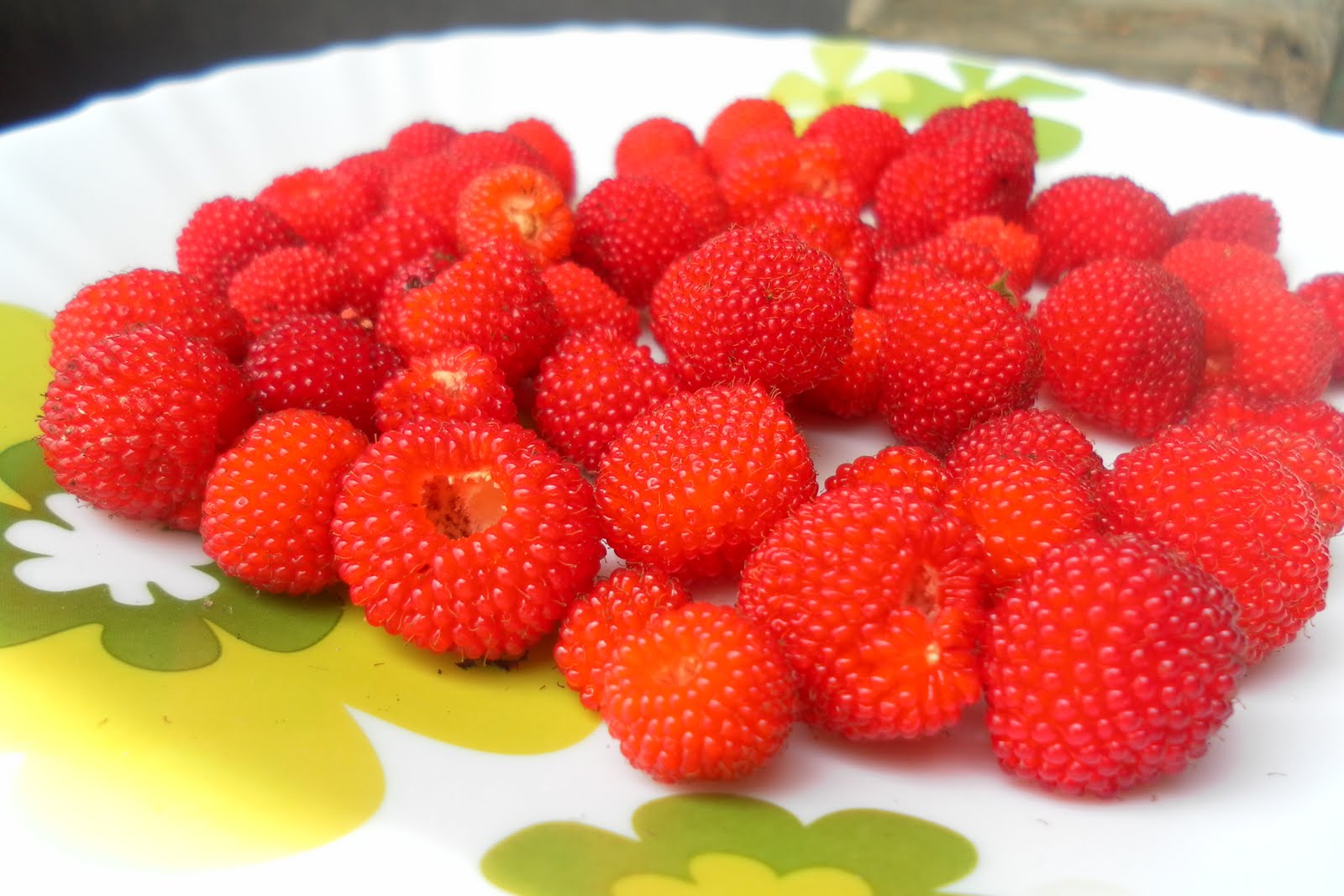
Local berries

Local veggies
Whenever we talk of Nagaland, the first thing that comes to our mind is 'rich natural resources', 'organic by default' and fresh green local vegetables region however, statistics and observation of buying habits of households and our own shopping trends show that majority of our consumption needs come from outside the State. In fact, it must be 99% of imports: from plastic chappals, plastic chairs, RICE, milk powder, tea leaves, fruits, onion, tomato, chili, oil, sand, bricks to even bread and jam!!! We hardly produce anything at all. We do not even make match sticks or candles locally despite the poor supply of electricity torturing us every day and 99% of trade in Nagaland is owned by non-locals.

Locally produced summer crops

We boast about local produce but we don't really produce the quantity required. Most farmers in the villages i met are contemplating on giving up farming all together. When I ask them why this is so...they say that it's better to buy directly from the market because they don't want to toil in the fields any more. They'd rather earn a daily wage of Rs 150 to Rs 200/- building someone's house or selling pork imported from other states (also check out recent news about imported dead pigs...uurgh!!) So where will all the products in the market for our to-be-ex-farmers come from? Not even a piece of biscuit or a lump of sugar from our own State.
I think it's important to understand who is really benefiting? How does that help us and our economy and food security in a long run? Food not produced locally cost more - labour, transportation, inter-state transportation tax, fuel, wastage, storage and high carbon emission. Local food is more fresh, more healthy, less cost for transportation, storage, packaging and marketing, more variety, tastier, juicier and as our label rightly suggests 'organic by default' (i hope it remains so forever). There is every reason why we have to grow our own local food, love local and eat local, the advantage is all ours and at the same time we make an impact on the larger world by lessening the burden we put on the environment and our planet earth. The more the distance our food travels to get to us the more the cost, both for us and our planet.
We work hard, fight hard, play dirty to amass wealth just to pay our invisible producers. We depend on government salaries, government subsidies, government funds and we use these resources to pay everyone else except ourselves. Everything we earn from our salaries, extortion and public-fund-snatching is paid to producers far away. We are under the mercy of producers, importers and non-local traders.
If the producer States and companies we depend on suddenly were to stop producing rice for whatever reasons besides the deterioration of soil structure which will definitely happen due to indiscriminate use of inorganic inputs, we would literally starve, besides 200 million of India's population is still underfed (http://envfor.nic.in), and that gives us a guilty mental kick to produce our own food because we have the land and the resources unlike some places where they can't even grow a balde of grass. Before the beginning of 1990's food was scare especially during road blockades, road damage and bandhs and military curfew etc...people in towns who had no farms would desperately run to non-local dukanwalas to buy rice and even maida, atta as much as their savings permit and eat the provisions very sparingly fearing the worst. We don't see these kind of situations these days thankfully but I don't know if this abundance of imported food will continue for the next 100 years?
The only industry we depend on is farming since some light years ago and if we give up even farming, the only solution is to import a spaceship (by selling our land) to immigrate to outer space and search for a planet that has plenty of food that gets manufactured automatically.
In Nagaland, we look down on farming as primitive and un-posh, also in Nagaland a person who is a farmer and lives in a village belongs to the lowliest of the lowly, just one level of existence above cows and pigs. Every parent in the village wants children to grow up and become VERY BIG Government Officers with cars that has red-blinking lights and a golden name-plate. Every village I visited usually included in their 'prayer list' a request to God for some one in their village to qualify the UPSC or NPSC so that they can give up farming and live a happy government-fed life. I am not against these villagers, I am against the perceptions and the self-destructing outlook we've developed over the decades. Another scary trend besides the traditional slash-and-burn ravage is the idea of the recent tree and crops monoculture that people are gradually beginning to love...
Agribusiness is big in many developed countries, we can take examples of some advanced States even within the country how they produce and trade food. However, sustainable agriculture that integrates environment conservation, social and economic equity enhancing the lives of local people, protecting our environment and ecosystems is what is relevant to us. Many conscious people around the world are opting for and promoting local produce and a thriving local economy. We can produce our local food for sure and perhaps we can even send some of our products and exotic produce to the current producers. With our 'organic by default' soil it is comparatively easy for us to practice sustainable agriculture for sustainable development especially for indigenous people like us.
"Like a tsunami, consumerism has engulfed human cultures and Earth’s
ecosystems. Left unaddressed, we risk global disaster. But if we channel this
wave, intentionally transforming our cultures to center on sustainability, we
will not only prevent catastrophe, but may usher in an era of
sustainability—one that allows all people to thrive while protecting, even
restoring, Earth." (Transforming Cultures, worldwatch.org)
Monday, 18 July 2011
Subscribe to:
Posts (Atom)